About

Twenty years, one question.

How do you design systems, services and software that hold up under the conditions people actually live in, not the conditions the design assumed?

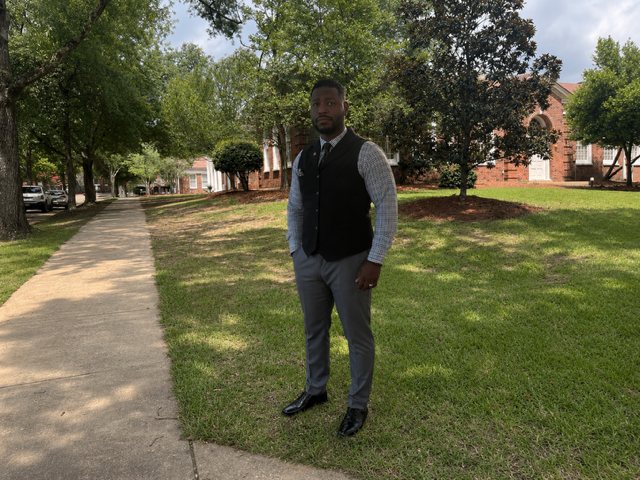
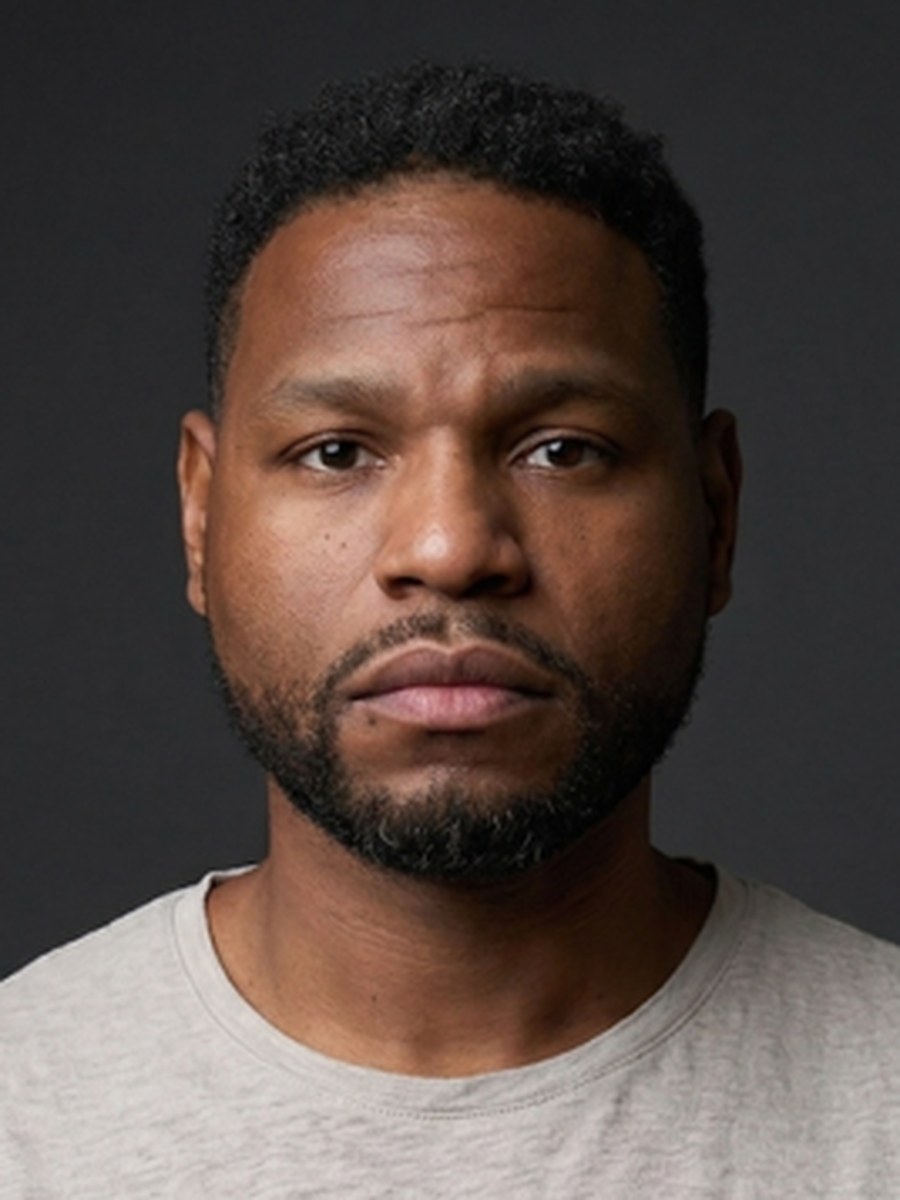
Portrait of Donald Harris
Based in Albany, New York
Role Founder & Principal,
Strategraph LLC

The short version

I study what happens after people say yes.

Adoption gets the attention. Abandonment gets the outcomes. My work sits in the gap between the two, in digital mental health, in community crisis systems, and increasingly in the products being built to serve both.

I'm an information scientist by training and a practitioner by temperament. I hold a Ph.D. in Information Science from the University at Albany, where my dissertation on why young adults abandon mental health mobile applications received the program's Distinguished Dissertation Award and the College of Emergency Preparedness, Homeland Security and Cybersecurity's Exceptional Research Project Award. Before that: an MBA from Regis University and a B.A. in Criminal Justice from Albany, with a psychology minor.

For over a decade, I helped build and deliver technical assistance to interagency teams of public officials across the country, most recently as an Assistant Director at Policy Research Associates. That meant developing a systems model for improving community crisis response, writing the multi-session curricula that taught it, and standing in front of a lot of rooms full of people who had every reason to be skeptical of another framework. It taught me something a Ph.D. alone doesn't: a model only counts if the people who have to live with it can use it on a Tuesday.

In 2022 I founded Strategraph LLC, a veteran-owned consultancy that brings data, design and facilitation to community mental health and crisis systems. Strategraph is where the applied work lives, needs assessments, systems maps, evaluation design, learning collaboratives, and data-literacy training for organizations that need to be able to read their own evidence.
Service

United States Marine Corps.

I enlisted out of high school and served four years, including a deployment in support of Operation Iraqi Freedom. It isn't the headline of my career, but it is the foundation of it.

The Marine Corps is where I first saw, up close, what it costs when the systems meant to support people don't reach them in time. Veteran and military-connected mental health has been a throughline in my work ever since, in the research, in the federal technical assistance, and in the fact that Strategraph is a Veteran-Owned Small Business.

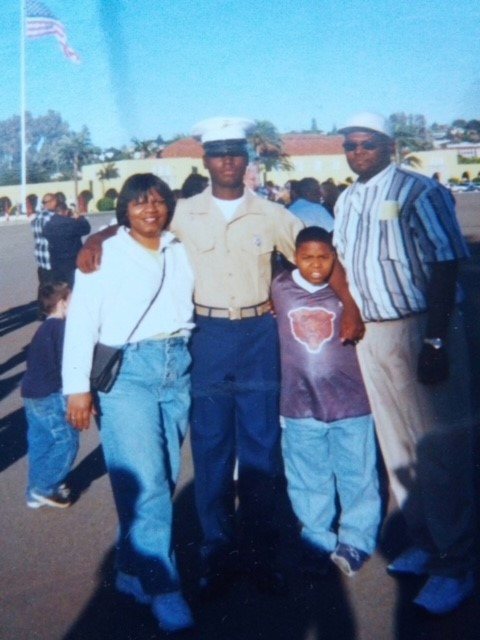
Donald Harris in uniform with family at recruit graduation
Recruit graduation
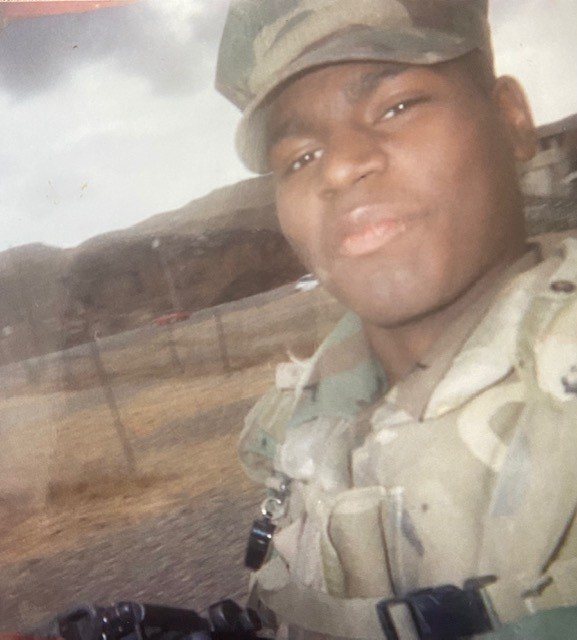
Donald Harris during combat training
Combat training
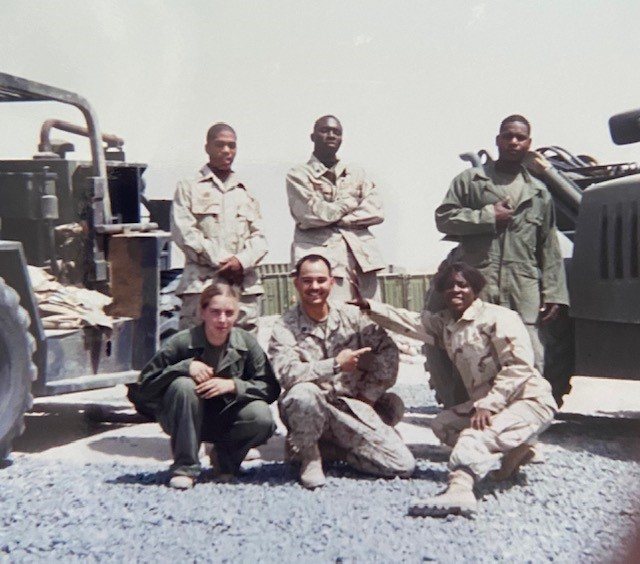
Marines deployed in support of Operation Iraqi Freedom
Operation Iraqi Freedom

The path

Nothing about it was linear.

Time in the desert to criminal justice to business school to federal technical assistance to a doctorate in information science. Each step looked like a detour at the time. In hindsight they were all the same work, and it's picked up a few honors along the way: the Distinguished Dissertation Award and Exceptional Research Project Award from the University at Albany (2026), a Benevolent Association research grant (2025), board service with the New York State Public Health Association, and membership in the American Medical Informatics Association and the Society for Health Communication.

  1. 2022 → present

    Founder & Principal

    Strategraph LLC, Veteran-Owned Small Business. Research, evaluation, systems mapping and facilitation for behavioral health and crisis systems.

  2. 2025

    Ph.D., Information Science

    University at Albany. Dissertation: Investigating Post-Adoption Abandonment of Mental Health Mobile Applications Among Young Adults. Chair: Dr. Archana Krishnan.

  3. 2020 → 2025

    Assistant Director

    Policy Research Associates. Curriculum development and national technical assistance for interagency public-official teams; systems models for community crisis response.

  4. 2021 → 2023

    Adjunct Instructor

    University at Albany, CEHC 210, Critical Inquiry. Argument construction, evidence evaluation and analytic writing.

  5. 2018 → 2020

    Senior Project Associate

    Systems model development for community mental health crisis systems, literature synthesis, expert interviews, model design.

  6. 2008

    M.B.A.

    Regis University, School of Management.

  7. 2006

    B.A., Criminal Justice

    University at Albany, minor in Psychology.

  8. 1999 → 2003

    United States Marine Corps

    Four years of active service, including deployment in support of Operation Iraqi Freedom.

Doctoral hooding ceremony at the University at Albany
Doctoral hooding, University at Albany
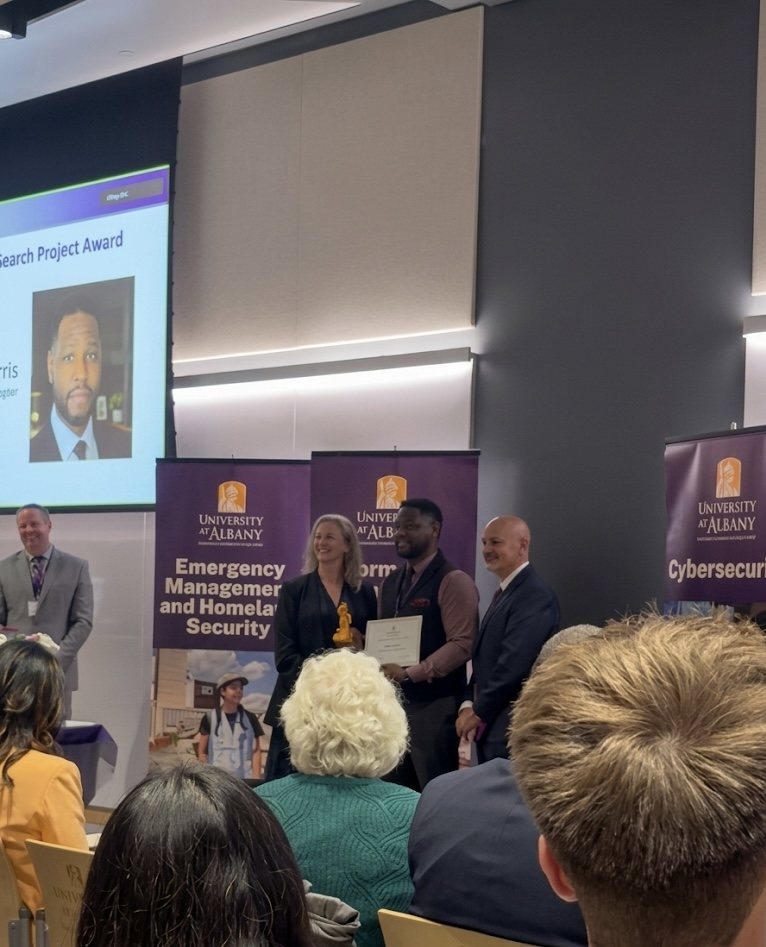
Receiving the CEHC Exceptional Research Project Award
CEHC Exceptional Research Project Award

Methods & tools

  • Python
  • R
  • Streamlit
  • SQLite
  • Qualtrics
  • Topic modeling
  • Mediation analysis
  • Survey design
  • Systems mapping
  • n8n

Tools and frameworks

What I've built.

Instruments and models that came out of the research and now do work in the field. The MHMA Friction Compass is the one that became a service, and it has its own page.

Tools

Shipped ยท v7

Systems Resource Mapping Tool

The working instrument behind Systems Resource Mapping, the method for walking a community through its own crisis response system, step by step, to find where people fall out of it. Used with state, county and federal partners.

  • Facilitation
  • Systems mapping

Application

Community Systems Mapping

A Python/Streamlit application for building and interrogating stakeholder network maps of community behavioral health systems, turning a whiteboard exercise into something that persists, updates, and can be handed to the next coalition.

  • Python
  • Streamlit
  • Network analysis

Prototype

Inhibitor-Abandonment Risk Index

The scoring layer beneath the Friction Compass, an index translating the Inhibitor-Abandonment Matrix into a comparable risk figure for a given product or feature set.

  • Risk modeling
  • IAM

Frameworks and models

Data Empowerment Model

A three-tier framework for building data fluency inside organizations that have plenty of data and no capacity to act on it, moving a team from reading a dashboard to designing the question behind it.

Inhibitor-Abandonment Matrix (IAM)

The four-quadrant taxonomy operationalized for product teams: classifying users by friction load and exit behavior so that healthy churn and product failure stop looking like the same number.

Systems Resource Mapping

A structured facilitation method that maps a community's crisis response as a sequence of steps and resources, exposing the handoffs where people are most often lost between services.

Theoretical foundations

Cenfetelli's dual-factor theory of inhibitors and enablers; the NASSS framework for non-adoption and abandonment of health technology; goal-attainment plateau; and coping self-efficacy.

Get in touch

A model only counts if people can use it on a Tuesday.

If that's the kind of problem you're working on, in a product, a system, or a study, I'd like to hear about it.